Speech Evaluations and Therapy Services for Autistic Children in Houston, Texas
Personalized Therapy for Your Child and Family
Our Approach to Therapy
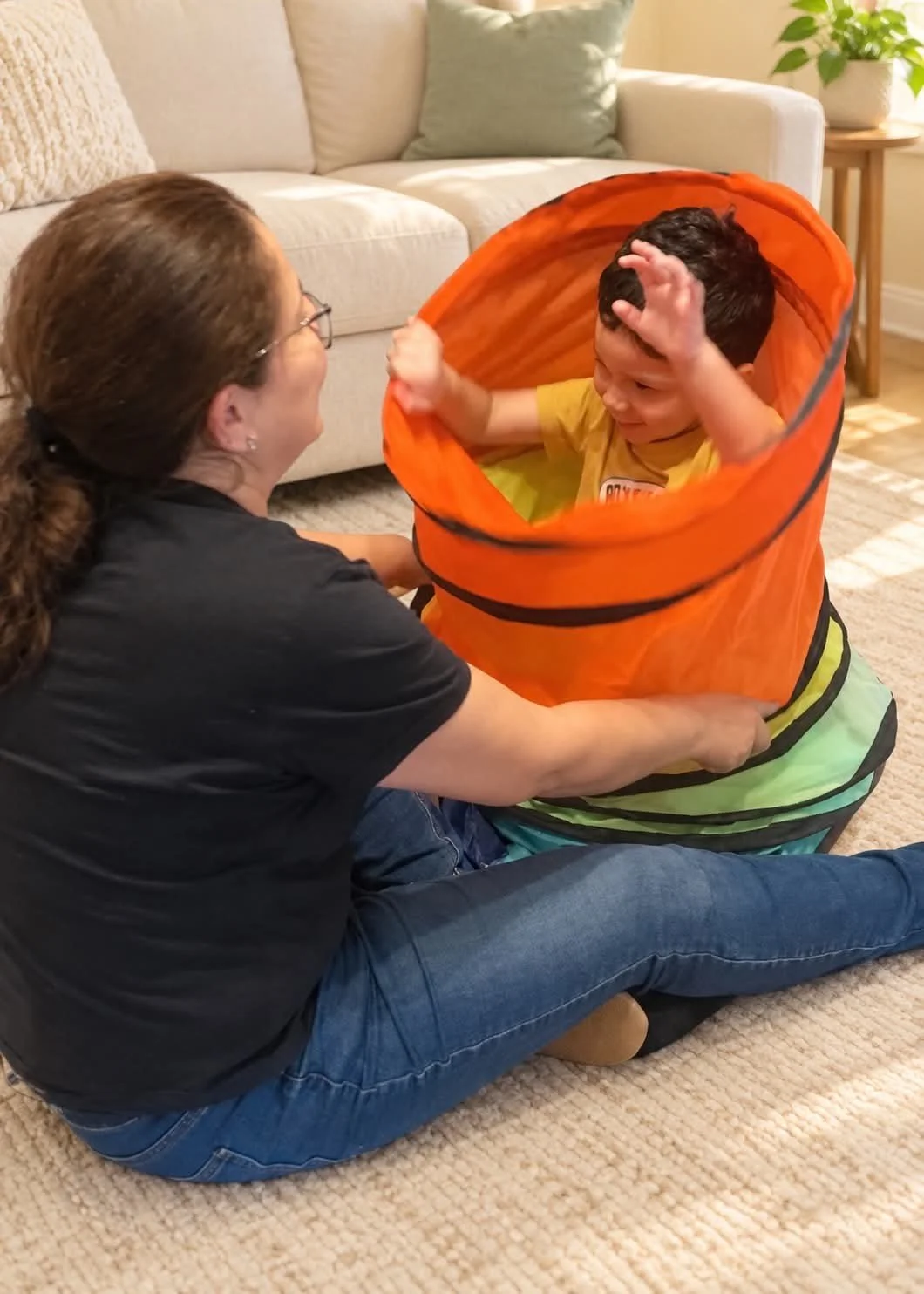
Every autistic child is different, and so is every family. Whatever your child needs, support is neurodiversity affirming and built around who they are:
Child-led: Following your child’s interests so they feel safe and engaged
Sensory savvy: Understanding how your child’s body experiences the world
Parent and caregiver focused: Giving you tools that fit your real, everyday routines
Social emotional: Building connection, trust, and regulation first
The goal is to help you connect with your child in a way that feels natural and works for your family long term. Every child deserves to be heard, and your child’s voice may look like spoken words, signs, AAC, a low-tech board, or a mix of all of them. Every form of communication counts.
Evaluations to Get to the Root of the Issue
Evaluations
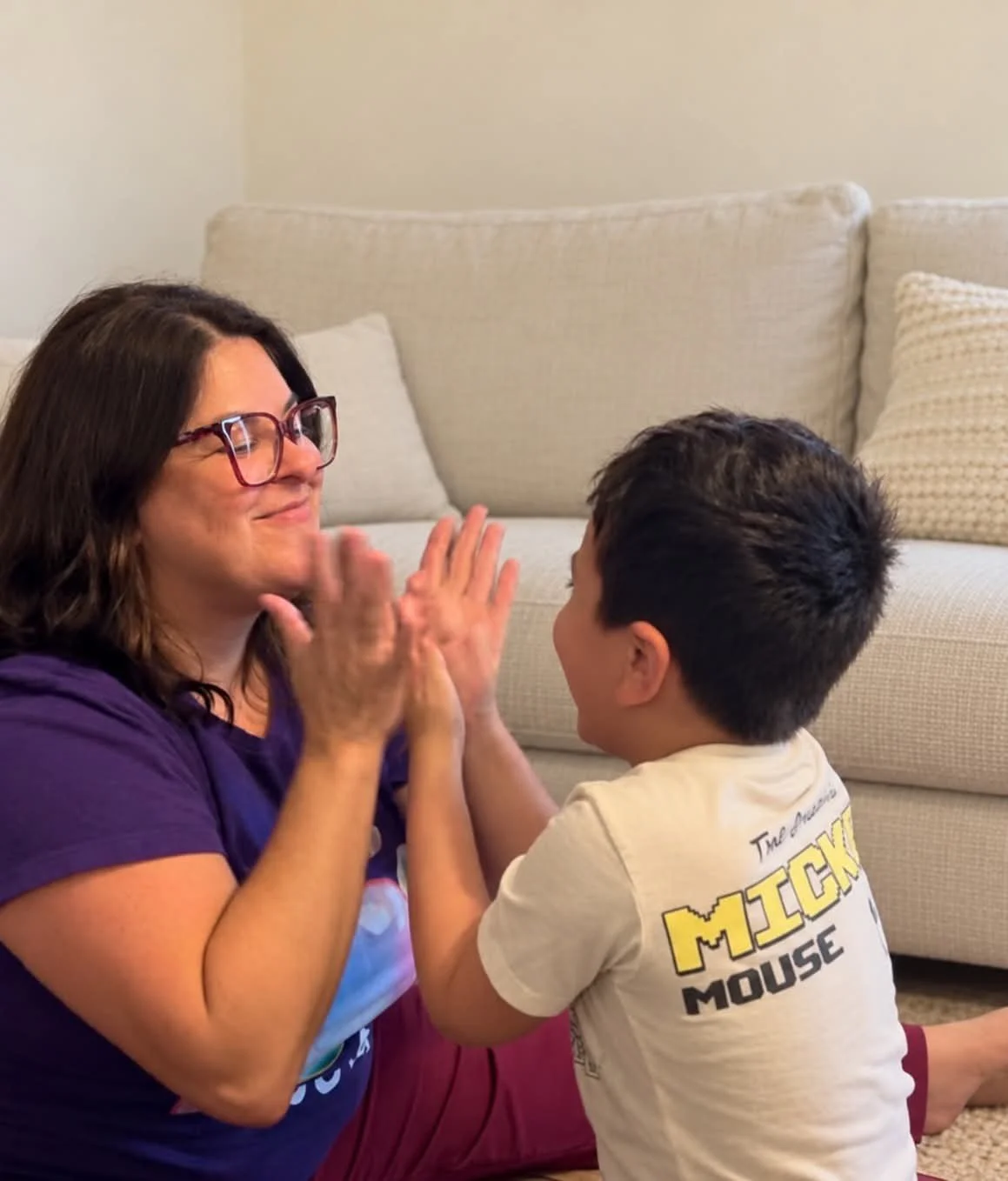
Whether your child already has an autism diagnosis or you’re starting to wonder, an evaluation is a chance to understand how your child communicates, learns, and connects. It looks at the whole child, and focuses on what matters most in your everyday life:
How your child understands, communicates, and connects with others
The many ways your child can communicate, including words, gestures, signs, and AAC
How your child plays, and how you can join in to build connection
Sensory differences that affect communication, regulation, and big emotions
Mealtimes and feeding challenges related to sensory needs
Whether AAC could help, and how to get started using it
You’ll walk away with a clear picture of your child’s strengths, what support could help, and practical next steps for your family. Evaluations are available in English and Spanish, so your child can be seen in the language, or languages, they use every day.
Specialties
Language Differences
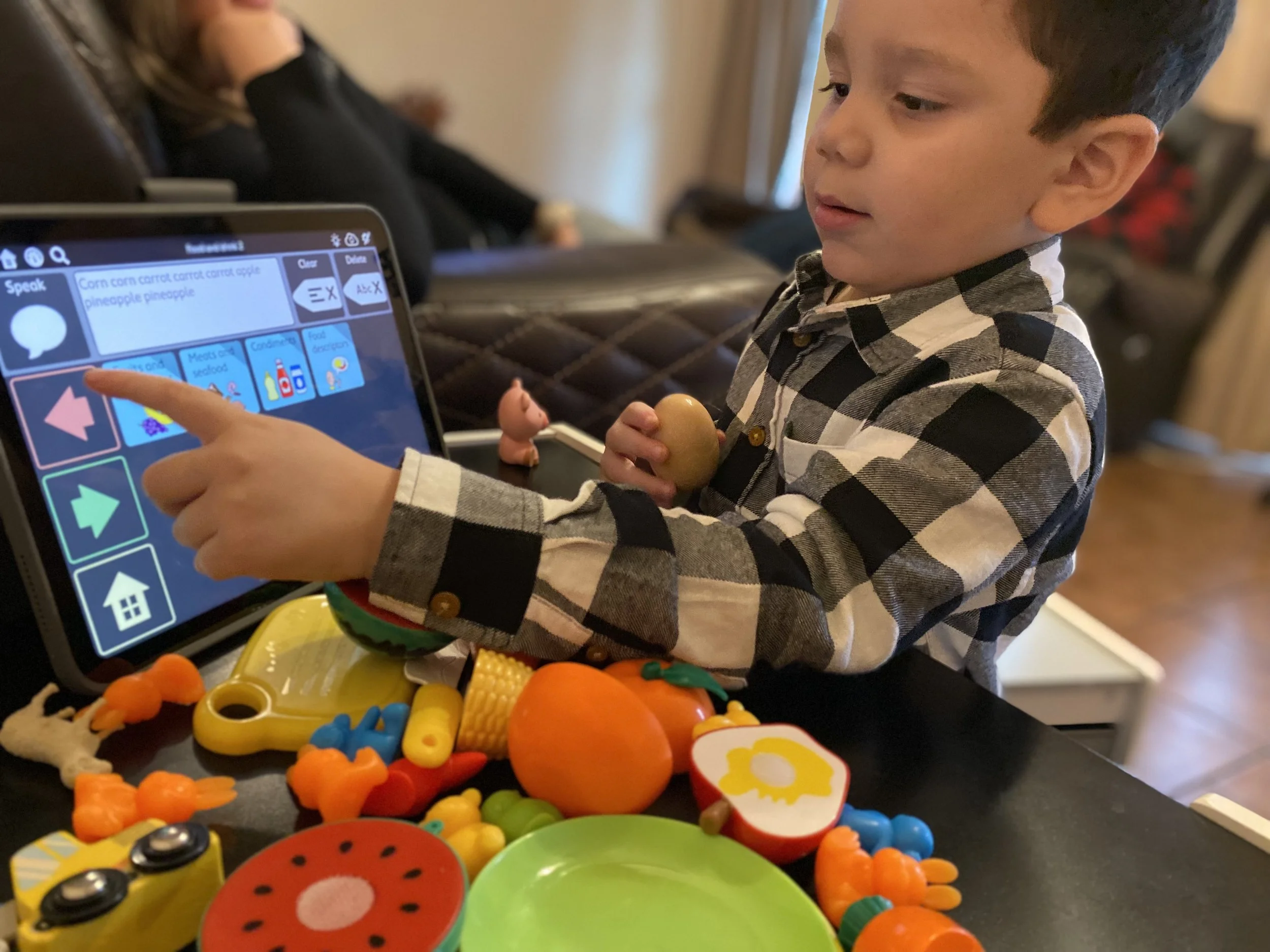
Maybe your child doesn’t use spoken words yet. Maybe they talk a lot, repeat lines from favorite shows, or understand more than they can say. Every autistic child communicates in their own way, and all of it is meaningful. Your child may be non-speaking, hyperverbal, use echolalia, or be somewhere in between. They may also be a Gestalt Language Processor (GLP), which simply means they learn language in chunks or phrases rather than single words.
Support uses many forms of communication, so your child has more than one way to be understood. That might look like:
Finding the right AAC device and learning to use it together
Helping your child understand and express big feelings
Social stories to prepare for big changes, like a new sibling, starting school, or potty training
Low-tech supports, like core boards, picture schedules, and communication books
Decoding your child’s scripts and offering new ones if they’re a GLP
Learning simple signs you can use at home
Every child and family is different, so support is shaped around what your child needs and what daily life looks like for you.
Sensory Differences
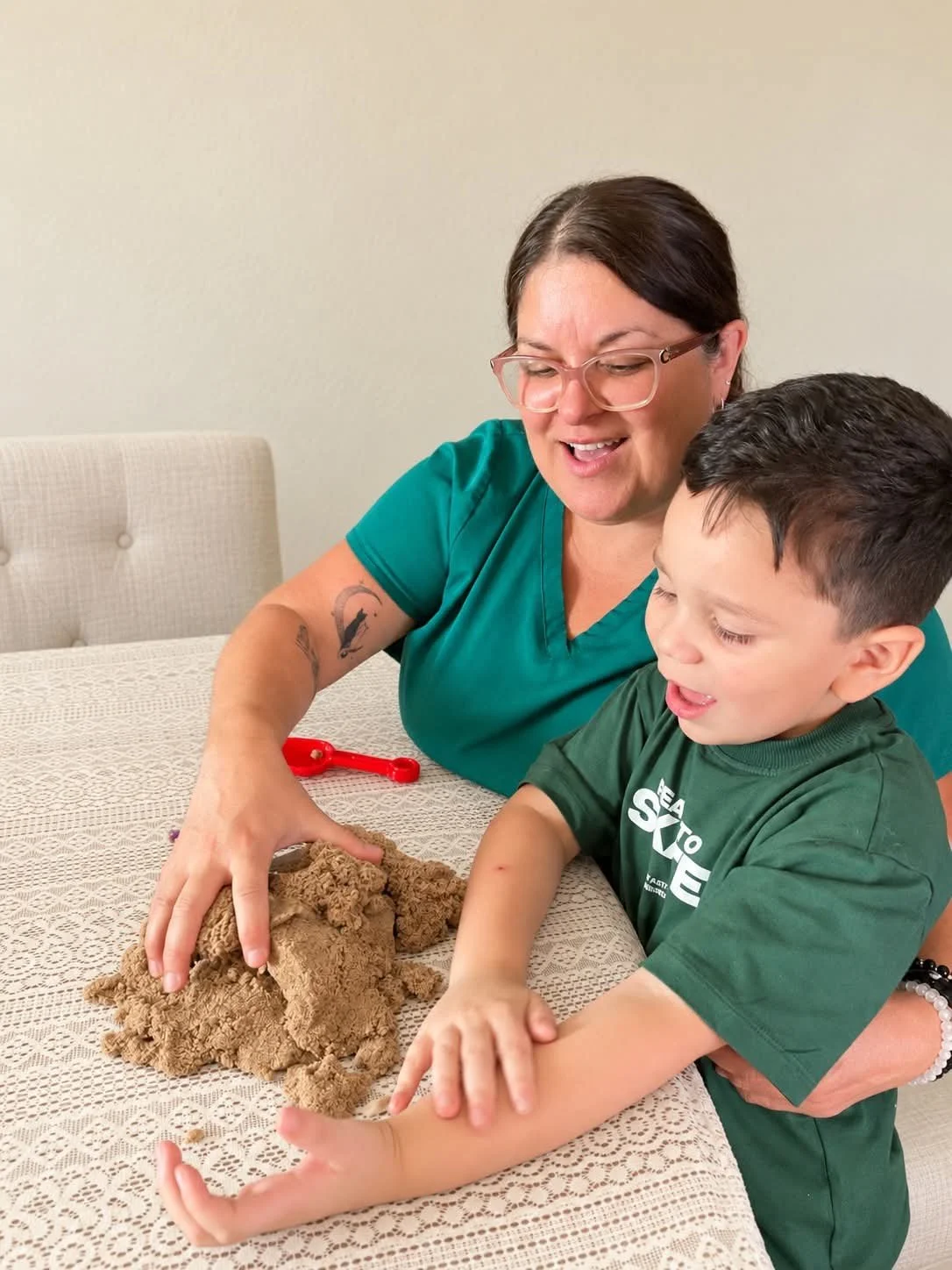
Maybe the grocery store is too loud, getting dressed is a daily battle, or your child only eats a few foods. Sensory differences are common in autistic children, and they can affect everything from mealtimes to meltdowns. A sensory savvy approach helps you understand what your child’s body needs, so everyday life feels more manageable for everyone. Support may include:
Feeding therapy for selective eating, so mealtimes feel less stressful
Movement and active play that help your child’s body feel calm and ready to connect
Practical tools for hard moments, like deep pressure, weighted vests, and heavy work
Supports for loud or unexpected noises, like noise-canceling headphones
Simple breathing strategies to help your child calm their body
Playful, expressive faces and movements that invite your child into back-and-forth interaction
These strategies are designed for real life, so you can use them at home and share them with your child’s school. When home and school use the same tools, your child feels more supported everywhere they go.
Parent Coaching
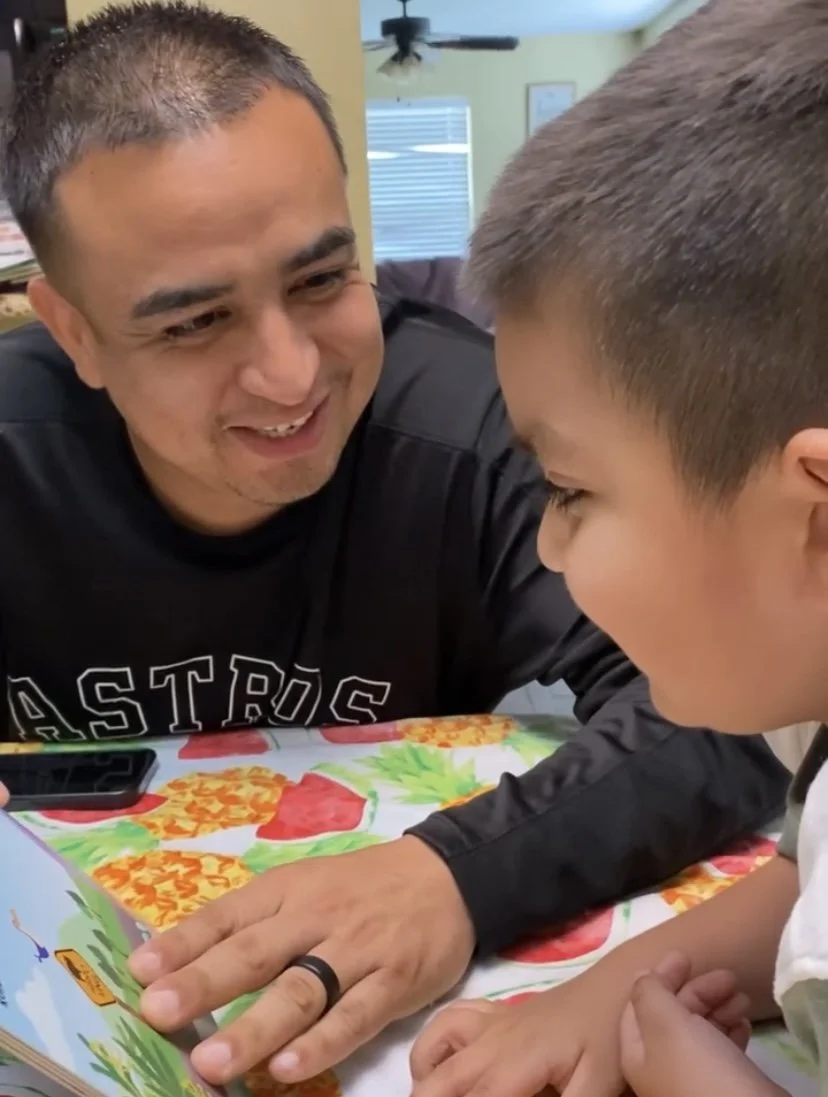
You know your child better than anyone. You’re the expert on your child and their most important teacher, which is why parent coaching is at the heart of this approach. Coaching helps you feel more confident and connected in the moments you share every day. Together, you’ll learn how to:
Understand your child’s cues, like grabbing your hand, a shift in where they look, stimming, or a meltdown, and what they might be telling you
Follow your child’s lead in play, where so much language and connection happens
Turn everyday routines, like grocery trips, cooking, bath time, and car rides, into natural chances to build language
Understand your child’s unique developmental profile and how it shapes the way you connect
Coaching is part of every session, so you’re never left on the sidelines. If you can’t be there in person, virtual parent coaching is also available anywhere in Texas.
Melody Movement Playgroup
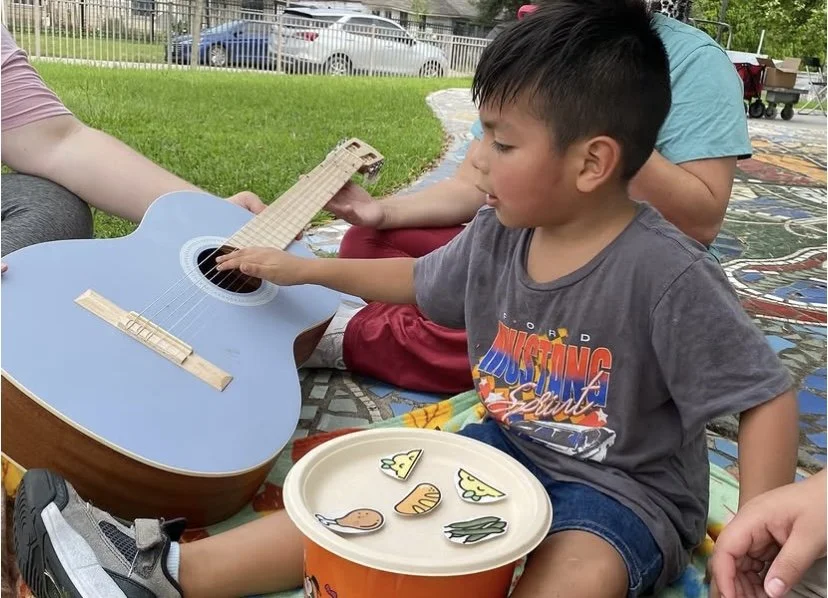
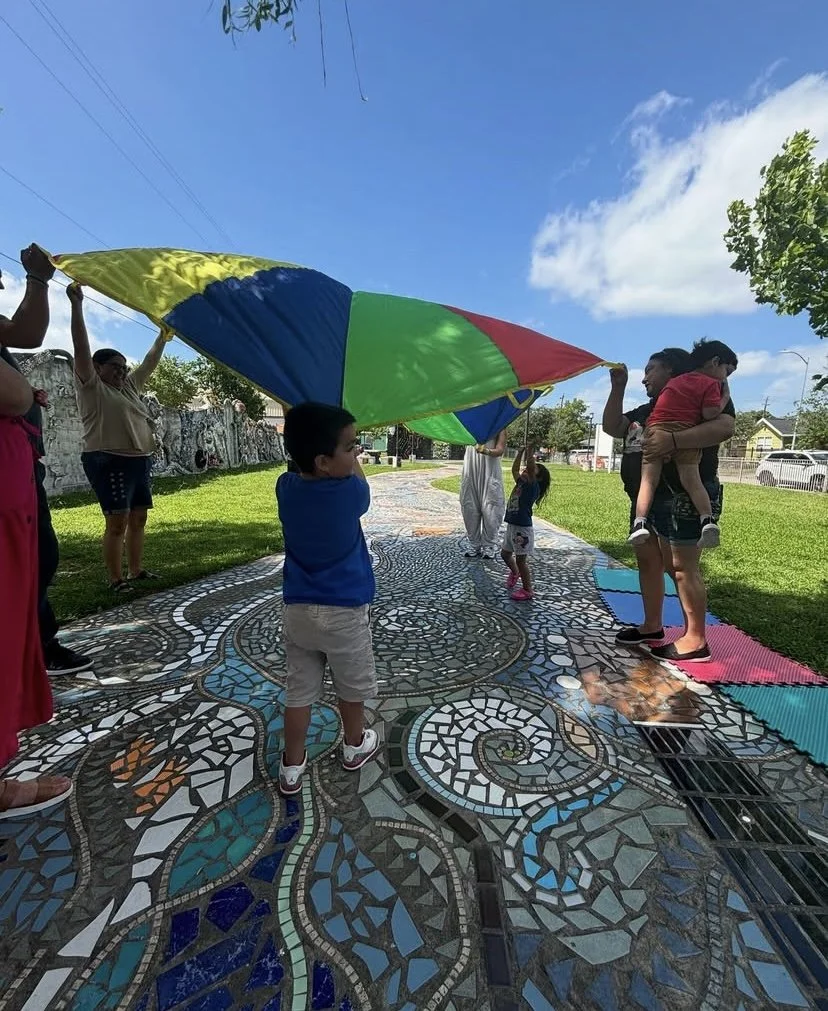
Our playgroups are led by speech, occupational, and music therapists. Music, movement, and play are combined to help children work on many skills such as:
Practicing social interaction and turn-taking
Building language through child-led play
Developing confidence with peers in a welcoming environment
Playgroups are beneficial for the children as well as the parents. Friendships, support, and community are all positive elements that can come of quarterly playgroups.